
What if a building could help produce the electricity it uses? And what if the power network could recognize signs of trouble before a transformer stopped working? Those are two of the questions that have shaped the research of Abdullah Al Fathah, a Bangladeshi electrical engineer now working in the United States.
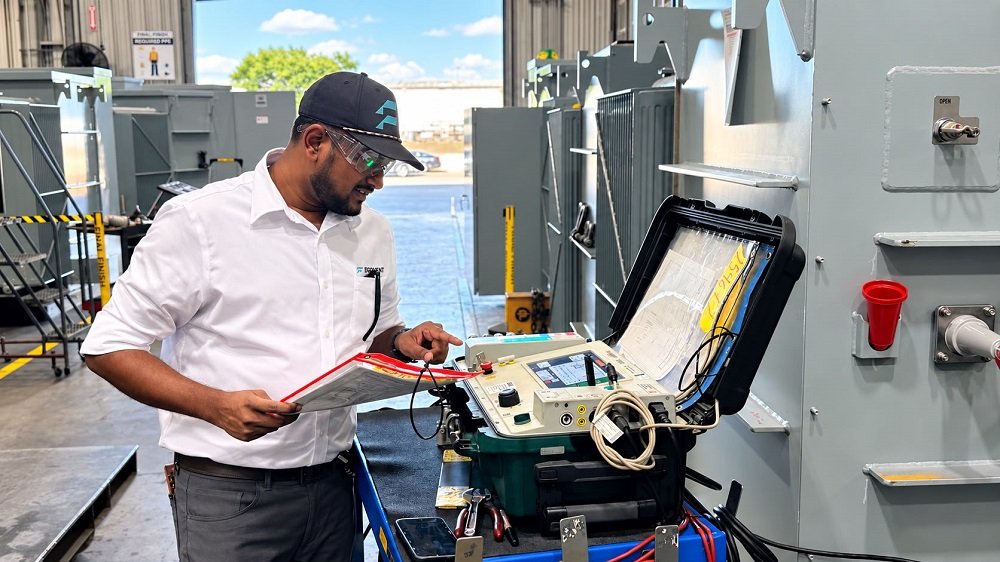
After building experience in Bangladesh’s electrical and industrial-energy sector, Fathah earned a master’s degree in electrical engineering at Lamar University in Texas in May 2025. His published work covers solar technology, artificial intelligence, electricity-grid monitoring and approaches to reducing wasted energy. He now works in the U.S. transformer industry, where the everyday requirements of power equipment give practical context to those research interests.
Making more electricity from sunlight
One part of his research looks at how a solar cell could convert more sunlight into usable electricity. In a 2025 study published in the scientific journal Langmuir, Fathah and his co-authors studied a hybrid solar-cell design that combined two light-absorbing materials and compared different layers that help electrical charges move through the cell.
The study used SCAPS-1D, a computer simulation tool, to examine how changing the thickness of layers, material properties, defects and operating temperature affected performance. Under the model’s optimized conditions, the proposed design reached a calculated efficiency of 35.91%. In simple terms, the simulation suggested that the design could convert roughly 36% of incoming sunlight energy into electrical energy under the specified test assumptions.
That figure is an important distinction: it was a simulation result, not a measured efficiency from a commercially manufactured panel. The useful finding was a clearer picture of which design choices may be worth testing in a laboratory before expensive manufacturing experiments begin.
Another study, published in 2022, examined building-integrated photovoltaics, or solar materials that form part of a building itself—for example, a roof or an exterior surface. The research considered not only electricity production but also how solar materials fit with building design, durability and energy management.
This work has been cited by independent researchers studying photovoltaic materials and energy-producing buildings. The citations show how the research has contributed to academic discussion, although they are not evidence of a commercial installation.
Helping the grid notice problems before people do
Fathah’s research also asks what happens after electricity has been generated. In a 2023 paper on predictive maintenance for smart grids, he and his collaborators examined the use of connected sensors to track clues such as heat, vibration and voltage. They described how artificial-intelligence methods could study the readings and help identify equipment that might need attention.
The principle resembles preventative health care: noticing early warning signs is often better than waiting for a serious failure. In an electric network, an early warning might allow engineers to investigate a developing problem before it interrupts service. Whether the approach can deliver those benefits in practice remains a question for further testing.
His present U.S. engineering work involves reviewing transformer operating requirements and coordinating with technical teams on questions involving electrical loading, heat, voltage control and protection. Those responsibilities are separate from his published AI studies, but they matter for future research because a computer cannot interpret an electrical system reliably unless its physical limits are understood.
From research papers to a workable plan
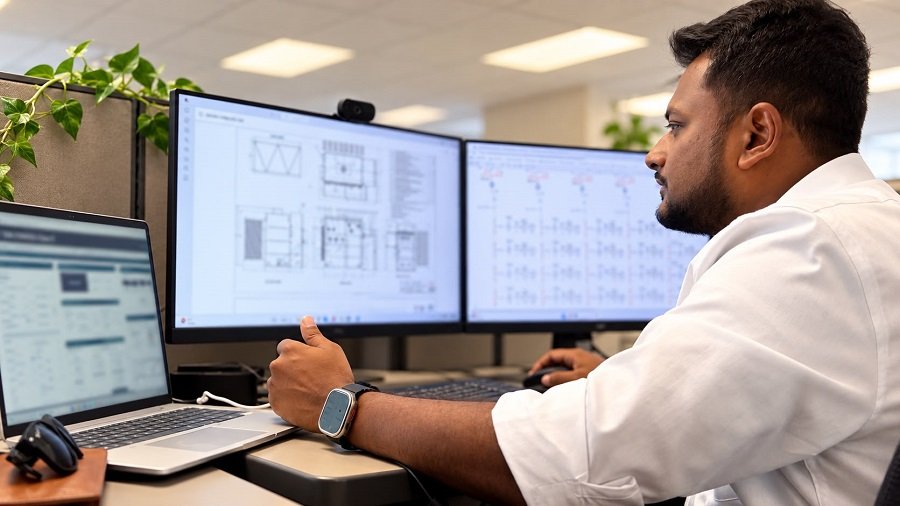
Fathah wants to test intelligent monitoring methods using public or appropriately approved equipment data. The first step would be to compare sensor measurements against established inspection and diagnostic practices. He would then develop and assess models that detect unusual behavior, identify likely faults and estimate maintenance needs, checking how often they issue false alarms and whether they hold up under different conditions.
For renewable energy, a parallel plan involves forecasting how much electricity people will need and studying when batteries should store power or release it. The aim is to investigate whether better predictions can help use solar energy more effectively while keeping electricity supply reliable. The next step is to test those ideas and measure how reliably they work beyond the computer model.
An ambition that reaches beyond one country
The challenges behind this work are not confined to America. Bangladesh also needs reliable power for households and factories, while countries everywhere are adding solar energy, storage and more connected equipment. Research that improves solar conversion, equipment monitoring and energy planning could be useful in many places if it can be validated and adapted to local conditions.
For Fathah, the achievement so far is a developing body of published work, recognition through independent scholarly citations and a role in a technically demanding U.S. industry. The next question is whether those research ideas can be tested well enough to become dependable tools for the engineers who keep electricity flowing.